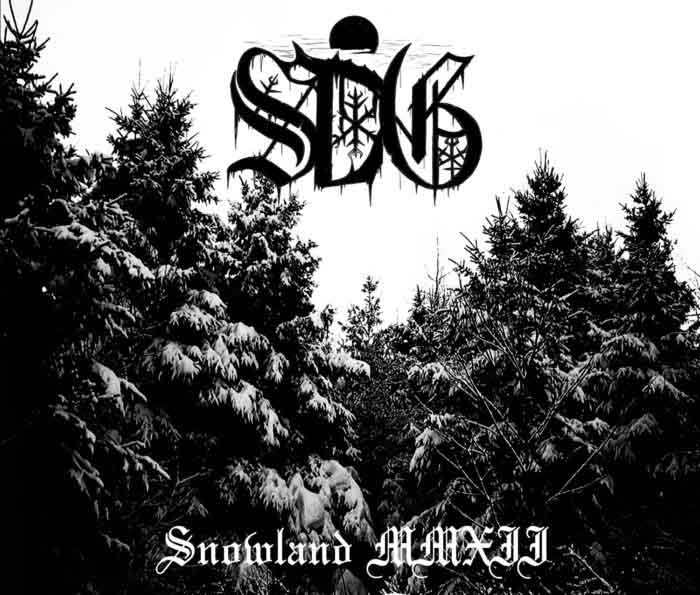
Artistically bankrupt metal bands typically rerecord their early material after milking the revenue streams dry through reissues, remasters, anniversary tours, and boxed sets. While the original recordings typically aren’t pristine productions, all charm is lost in the sample-replaced, quantized, digitally-reamped, and phase-butchered retreads shat out by an obsessive tinkerer’s digital audio workstation. All enthusiasm in the performances is butchered by years of alcohol abuse and aging journeyman musicians collecting just another paycheck, e.g. Sodom’s The Final Sign of Evil, Manowar’s Battle Hymns MMXI, and Bolt Thrower’s “World Eater ‘94”. Snowland MMXII is one of the few exceptions to this rule of rehash.
The original Snowland relied heavily on poor production and lead keyboard melodies at times bordered on tribute to Sorcier des Glaces‘s Norwegian forebears to establish a nihilistic, inhuman atmosphere. Snowland MMXII‘s production and mix is relatively cleaned up and digitally compressed but still delightfully dirty in the right places. The rerecording establishes atmosphere through the refined and elaborated musical composition where the Snowland CD-R relied on mere aesthetic elements such as tape hiss and and panning everything to the right in hatred of human binaural hearing.
All the keyboard leads so prevalent in late Nineties black metal are gone; Snowland MMXII was recorded after Sorcier des Glaces’ anti-keyboard epiphany. Expanded rhythm and lead guitar parts replace them with more variations and tremolo picked, arpeggiated chromatic chord progressions. Hyper-extended riff phrasing constructs internal riff narrative in what would otherwise be conventionally structured verse-chorus-verse songs. Luc Gaulin’s metronomic drumming is similarly improved over the lethargic in comparison original: he now ritualistically keeps time, building tension through repeated blast beats alleviated with rhythmic catharsis in precisely-placed fills.
Snowland MMXII entrances deep into a primeval Canadian wilderness that cares naught about the absurdity of continuous human existence. Replacing the original as the band’s most essential material, it conveys the sort of existential nihilism and misanthropy typically seen in a Herzog film through black metal music: the awesome discovery of a pristine, unconquered temperate biome and nihilistic desperation upon realization that the uncaring natural forces of the world seemingly embrace, encourage, and hasten the self’s eventual death.